About the outreach

One Catholic faith, lived in the Christian East

Saint Andrew of Crete is a Ruthenian Byzantine Catholic outreach—fully Catholic, rooted in apostolic tradition, and serving Iowa from two locations.

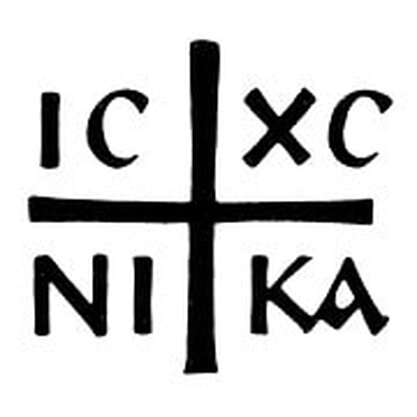
Victor’s Cross

What is an outreach?

A growing Catholic community attached to a parish

Eastern Catholic Churches are arranged into eparchies, much like dioceses in the Latin Church. The Byzantine Eparchy of Parma is based in Ohio and covers twelve Midwestern states, including Iowa.

An outreach has neither parish nor mission status. It is attached to an established parish. The Iowa outreach is attached to Annunciation Byzantine Catholic Church in Homer Glen, Illinois, outside Chicago.

12states in the Eparchy of Parma
1969year the Eparchy of Parma was established
2024year Father Bruce Riebe was assigned to Iowa
2Iowa locations: Des Moines and Iowa City

Current leadership

Verified August 16, 2026

Current names and roles are linked to official Church sources.

Universal ChurchPope Leo XIV

Bishop of Rome; his pontificate began May 18, 2025.

Holy See source ↗
Eparchy of ParmaBishop Robert M. Pipta

Sixth Bishop of Parma; ordained and enthroned November 8, 2023.

Eparchy source ↗
Iowa outreachFather Bruce Riebe

Outreach administrator; assigned to Iowa effective August 1, 2024.

Eparchy appointment ↗
Attached parishVery Rev. Thomas Loya

Pastor of Annunciation of the Mother of God in Homer Glen.

Eparchy directory ↗

Origin and expansion

The Iowa outreach story

Occasional long-distance visits became stable, full-time sacramental ministry in central and eastern Iowa.

01

About 2015

The first liturgies in eastern Iowa

The fledgling congregation gathered at Roman Catholic parishes in Iowa City. Visiting priests drove long distances and celebrated on Sunday afternoons as their schedules allowed.

02

A home in Muscatine

A dedicated worship space

The faithful found a former restaurant in a Muscatine strip mall. It provided a morning timeslot, and the interior was given a Byzantine character, including an iconostasis.

03

November 2023 – August 2024

A renewed eparchial commitment

After Bishop Robert Pipta was installed as Eparch, he pursued a presence in every state of the Eparchy. With the encouragement of Father Thomas Loya, he assigned Father Bruce Riebe as Iowa’s first full-time outreach priest in August 2024.

04

January – August 2025

Expansion to Des Moines

An inquiry to the chancery led to monthly Divine Liturgies in Des Moines beginning that February. After five months, the larger and fast-growing Des Moines area became the outreach’s position of strength.

05

Since August 2025

One outreach, two locations

Since August 2025, Divine Liturgy has been offered weekly in Des Moines and monthly in Iowa City, sustaining a Catholic presence in both central and eastern Iowa.

Saint John Paul II wrote in Ut Unum Sint of the Church breathing with both lungs, East and West. Anyone interested in the richness of Eastern Catholic spirituality is invited to join us.

See liturgy times

Apostolic origins

One holy, Catholic, and apostolic Church

Through the Holy Spirit working in the Apostles, the Church spread from Jerusalem through the Roman Empire and beyond. Major Christian centers—including Jerusalem, Antioch, Alexandria, Rome, and Constantinople—helped shape distinct liturgical and theological traditions.

The Catholic Church comprises the Latin Church and 23 Eastern Catholic Churches: 24 self-governing Churches in full communion. The Ruthenian Church is one of those Eastern Catholic Churches.

01

Jerusalem

The city from which the apostolic mission went forth.

02

Antioch

A source of major Eastern liturgical traditions.

03

Alexandria

A historic center of Christian worship and theology.

04

Rome

The apostolic see associated with Saints Peter and Paul.

05

Constantinople

Formerly Byzantium, a center of the Byzantine liturgical tradition.

What is an Eastern Catholic Church?

Same faith and mysteries. A distinct expression.

Eastern Catholics share the same Catholic faith and sacraments while living them through distinct liturgical, spiritual, canonical, and theological traditions.

Each Eastern Catholic Church is sui iuris, or self-governing, within full communion with the Bishop of Rome. Several Churches may share one liturgical tradition; the Ruthenian Church belongs to the Byzantine tradition.

This overview follows the official resources of the Eparchy of Parma and Vatican News.

One communion

The Catholic Church

24 self-governing Churches
Western tradition

The Latin Church

One self-governing Church

Eastern traditions

23 Eastern Catholic Churches

01Alexandrian
02AntiocheneWest Syriac
03Armenian
04ChaldeanEast Syriac
05ByzantineThe Ruthenian Church belongs here

A liturgical tradition may be shared by more than one self-governing Church.

Updated August 2026 from the USCCB’s five-tradition overview and the Vatican’s count of 23 Eastern Catholic Churches.

The Ruthenian Church

From Carpathian Rus’ to the United States

“Ruthenian” was used by the Catholic Church for Byzantine Catholics of Eastern Europe, especially those once living under the Austro-Hungarian Empire.

Their ancestral homeland—called Carpathian Rus’, Transcarpathia, Carpatho-Ruthenia, Carpatho-Russia, or Carpatho-Ukraine—lies across today’s eastern Slovakia, southwest Ukraine, northeast Hungary, and northwest Romania. The Carpatho-Rusins received Christianity from the Byzantine Empire.

In 863, the Byzantine Greek brothers Cyril and Methodius, the Apostles to the Slavs, brought Christianity and a new Slavonic alphabet to Greater Moravia. Their followers moved east and eventually evangelized the Ruthenian people.

Many Ruthenian faithful came to the United States in the late nineteenth and early twentieth centuries seeking work and Greek Catholic parishes. In 1924, the Holy See established the first Greek Catholic exarchate in the United States for Carpatho-Rusyn, Hungarian, Slovak, and Croatian faithful, with Bishop Basil Takach as its first bishop. It became an eparchy in 1963; the Pittsburgh see became an archeparchy in 1969.

Sui iuris

Of its own right

Self-governing

The Ruthenian Church is sui iuris—literally, ‘of its own right.’

Equal in dignity

The Eastern Catholic Churches and the Latin Church are equal in dignity.

In communion with Rome

We are united with the Bishop of Rome in the one Catholic faith.

A complete tradition

We have our own clergy, laws, institutions, liturgies, spirituality, and methods of theology.

Dogma and discipline

Shared truth, authentically expressed

Eastern Catholics profess the same faith as other Catholics while expressing it in their own inherited way.

Dogma

Truths of faith definitively taught and held throughout the Catholic Church.

Discipline

Church laws and practices that can differ among self-governing Churches and may change over time.

Source and wider Church

Byzantine Catholic Eparchy of Parma

Led by Bishop Robert M. Pipta · 5000 Rockside Road, Suite 310 · Independence, Ohio 44131